

The Wrong Question
On "were you close," the hierarchy of grief, and what to ask instead.


"It's a really strange question."
~ Anne Pinkerton
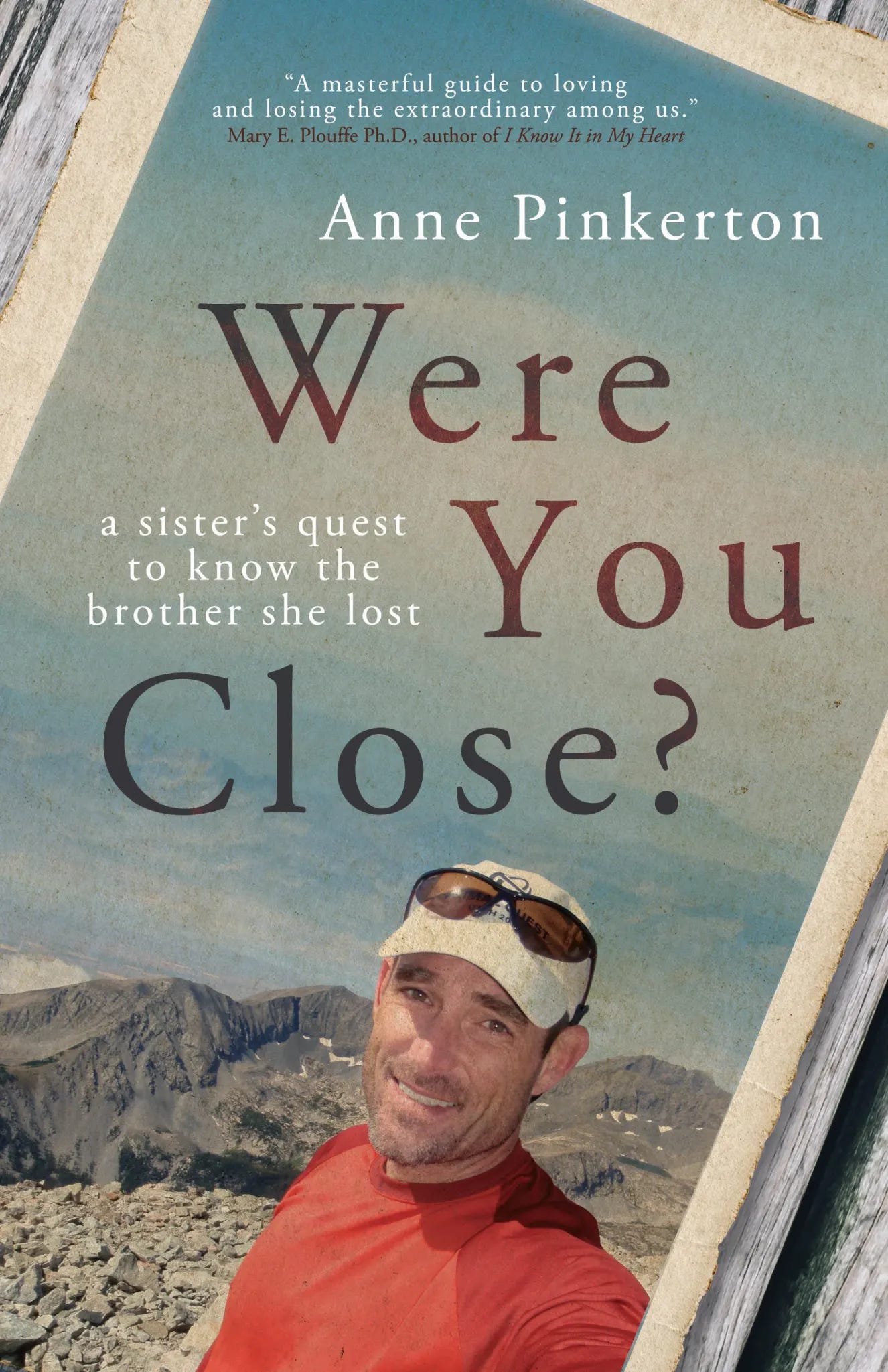
When I sat down with Anne Pinkerton for our most recent episode of the podcast, she told me about the question she has been asked more times than she can count. The one she named her whole memoir after.
Were you close?
Anne lost her 47-year-old brother David in 2008. He fell while hiking a mountain in Colorado. David, an elite athlete and a radiologist, was the big brother Anne had looked up to her whole life.
In the days and years since losing him, the question people ask Anne, again and again, is whether the two of them were close.
In our chat, Anne said plainly what many of us who have been asked this question have likely thought, “It’s a really strange question.”
When I am asked this question, I have never once known how to answer it cleanly.
🐺
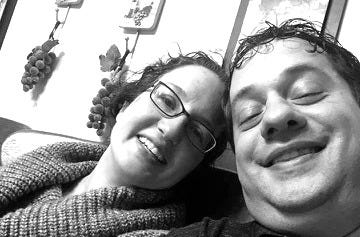
Tony and I were always close. That part was never in question for me or him, even if others may have perceived it differently. I know some people did.
You see, for a stretch of years, we drifted a bit as life got complicated for both of us and in the years before computers or cellphones dominated the world. Life presented challenges in the way it does, and we did not talk the way we used to or as often as either of us would have liked, for reasons I am not likely to share here.
The closeness was still there underneath, but the contact thinned, and we both let it for some very good reasons. When we were together in person, we didn’t miss a beat. The knowing looks, the inside jokes, the laughs, the love, and the affection were proof of that closeness.
Yet in some ways it didn’t look idyllic to those looking in including some people who supposedly knew us best. I carry that knowledge and those experiences of limited contact with guilt and regret. While I cherish all the times we did connect, even if we were arguing or not seeing eye to eye, it feels really heavy to think about it all.
If I am honest, I feel quite badly about those times we didn’t see one another, about the calls I did not make, about the calls he didn’t make, and about assuming there would be time to get back to each other.
But then circumstances changed, and we did get back to each other.
🐺
In the last two weeks of his life, Tony came back to himself. We communicated every day via texts, calls, messages on various apps. Every single day for two weeks we were intentionally coming back to one another and making big plans for the rest of the year.
It was the old closeness returning. I still remember sitting on my bed, giving my big brother advice and hearing his gratitude followed by his quick wit and sarcasm to lighten the heavy moment. I cherish those days, conversations, and moments. I remember looking forward to the rest of the year with glee and comfort that we would be okay.
Then he died.
🐺
So here is what I know now, and what Anne named so well in our talk and in her book. “Were you close?” is the wrong question.
When someone asks me, the true answer does not neatly fit in a box. What I want to say is “Yes. Always.”
But because we also drifted from time to time and in 2020 were finding our way back, it feels untrue to simply say “yes” and too painful to tell the full story.
I lost that closeness in the exact moment it returned to me. In addition to grieving the amazing brother I lost, I grieve the potential for the growth in the relationship, the future, and the simplicity of the closeness we had before we were adults.
Grief theorists, researchers, and thanatologists have a name for this grief. We call this secondary loss which means the losses we experience as a result of the primary loss, in this case my brother.
The closeness we had just rebuilt was ripped away from me right when I had it again.
The question “Were you close?” cannot hold the complexity of answers like mine. It begs for a yes or a no without acknowledging that “closeness” is both subjective and variable.
🐺
This is what I wish people understood. Closeness and contact are not the same thing.
You can love someone deeply and not be talking much. You can drift for years and never stop being close. You can be in the middle of finding your way back when the chance is taken. The frequency of the phone calls, visits, messages, or cards is not a measurement of the bond. You can be in constant contact with someone and not feel any real connection or meaningful relationship.
“Were you close?” treats closeness and frequency of contact as the same. It hands you a ruler and asks you to report a number. What you are actually holding is a whole relationship, with all its seasons and nuances, that may not be easy to explain.
🐺
If you have been asked this question and felt the quiet judgment underneath the question, I want you to know you were not alone.
The question really does miss nearly everything.
So, if you are carrying guilt about a season you were not as close as you wanted to be, that guilt is not proof that you failed them. Maybe for you, you had unfinished business, estrangement, or other reasons you were not in frequent contact, but are struggling to understand how and why you are still grieving them.
Maybe your relationship was exactly what you wanted and you feel awkward answering because you aren’t sure why the listener is asking.
All of these scenarios (and whatever ones I have missed that may be yours) are valid. They do not diminish your loss or your right to grieve in whatever way you grieve.
🐺
Here is the thing. Prior to losing Tony, I know I asked this question. And as I said to Anne, until recently, I even asked this or a similar question with my clients.
So, what is a better question or approach for the people who want to do right by us?
When people ask Anne what to say instead, she tells them, “Ask their name. Ask what they were like.”
After those statements, I would add, “Tell me about your relationship.”
These approaches do not audit the relationship or put the person on the spot for a binary answer. Rather it makes room for conversation, and hands the grieving person a reason to say their person’s name out loud, to share what they need to share in the moment albeit positive, negative, or neutral.
So the next time someone asks you the question, give yourself permission to share what you are comfortable sharing that you need to share.
🐺
There is so much in this week’s episode I want you to hear. Anne talks about continuing bonds, about writing her way through grief, about the strange experience of becoming older than her older brother ever got to be. Please listen wherever you get your podcasts.
🐺
Here’s a writing prompt for today:
What did you say the last time someone asked you “Were you close”? And what do you wish you had said instead?
Write for five minutes. No editing. No judgment. Just let it come.
Three more prompts arrive tomorrow, free for every subscriber. A longer set arrives later in the week for paid subscribers.
Warmly,
Angela
Tony’s little sister 🐺
Register for our inaugural book club, Tony’s Corner, in which we are reading Brilliant Disguise by Susan Kellam. It is happening at the end of the week on June 13th. If you can’t attend, register and you will have access to the recording. It’s pay what you can, starting at a $1 minimum.
Paid Wild Grief subscribers attend for free.
The Broken Pack: Stories of Sibling Loss is available wherever you listen or watch podcasts.
Follow us on Instagram
Wild Grief is written by Dr. Angela Dean, PsyD, FT, GTMR (psychologist, thanatologist, and Tony’s surviving sibling). Interactions with The Broken Pack, LLC, Dr. Angela Dean, and its content do not constitute a therapeutic or professional psychological relationship with Dr. Dean. All content is educational and informational, not clinical advice. If you or someone you know is in crisis, please reach out to your local crisis line or warm line, or visit findahelpline.com.
Wild Grief is original work by Dr. Angela Dean and is protected by copyright. You are welcome to share posts via link. Please do not copy, reproduce, or republish content elsewhere without written permission. Certain Broken Pack resources, including A Surviving Sibling’s Bill of Rights, are separately released under Creative Commons (CC BY-NC-ND 4.0) and may be shared in full, with attribution, for non-commercial use. Those resources will say so explicitly.
Learn more about The Broken Pack.